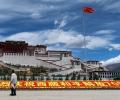
National security, consolidation of border defences and border security highlights China's Tibet policy, points out Jayadeva Ranade, the former senior RA&W officer and China expert.

China has ordered all Buddhist monasteries in Tibet to display China's national flag as part of its efforts to maintain social stability in the restive Himalayan province, which experienced self-immolation protests against the Communist party rule.
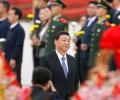
Wang Junzheng, Tibet's new Communist party boss, is on a number of sanctions lists by the US, Britain, the EU and Canada, for his tough role in Xinjiang, aimed at China's Uyghur ethnic minority, observes Jayadeva Ranade, the retired senior RA&W officer and distinguished China expert.

'Why assail the Tibetan leader at a time when many in China realise that the Buddhist monk is the best bet if Beijing is seriously trying to find a solution to the Tibetan issue?' asks Claude Arpi.

China is worried about the situation post the Dalai Lama and that his reincarnation could surface in Arunchal Pradesh, a region it claims as its own, but which is part of the Indian Republic, says former RA&W Additional Secretary Jayadeva Ranade.

Why is China's supreme leader promoting Han Chauvinism so aggressively, asks Claude Arpi.

'He still has to deal with party norms and traditions and has been careful to follow the order of seniority,' points out Claude Arpi.

Statements emanating from the recent Chinese Communist party congress suggest potentially increasing pressure on India with regard to the Dalai Lama and the Central Tibetan Administration in Dharamsala, notes former RAW officer Jayadeva Ranade.
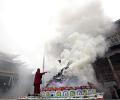
China has been keeping tabs on the restive Tibet province through a 'grid' system and some 600 'convenience police posts' armed with high-tech equipment that monitor the daily life of the citizens of Lhasa and other Tibetan towns. Worse, 'volunteer security groups' known as 'Red Armband Patrols' are roaming around in order to get more information and 'classify' each and every citizen, says Claude Arpi
 © 2026 Rediff.com - Advertise with us - Disclaimer - Privacy Policy - Sitemap - Feedback - About us - Terms of use - Grievances